
Physical Anxiety - A Wake-up Call?
If you’ve ever thought, “I’m just exhausted”—but sensed there was something deeper stirring—this is for you.
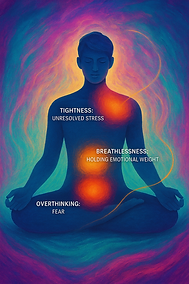
Last time, I shared how years of stabbing shoulder pain turned out to be more than a physical problem. That pain carried emotional weight I hadn’t yet faced. Once I worked through it, the pain began to ease. Let’s go a little deeper.
Physical anxiety doesn’t always look like panic. Sometimes it shows up as:
A knot in your stomach before a difficult conversation.
A racing heart that wakes you at 2 a.m.
A “mystery” pain that has no apparent explanation.
Exhaustion that no amount of sleep seems to fix.
Doctors might call it tension, stress, or imbalance (and yes, hormones, inflammation, and sleep can play a role). But here’s the bigger picture.
👉 Physical anxiety is often your body’s way of carrying emotions you have not yet process.
What Science Reveals
Two streams of research shed light on this connection:
Bessel van der Kolk, M.D. in The Body Keeps the Score shows how trauma and unresolved emotions are stored in the body. Trauma changes how the brain processes memory and threat, leaving the nervous system on “high alert.” This often expresses itself through physical symptoms long after the event has passed.
Candace Pert, Ph.D., neuroscientist and author of Molecules of Emotion, discovered that neuropeptides—the body’s chemical messengers—carry emotional signals throughout the body. These molecules bind not just in the brain, but in the immune system, gut, and other tissues. When emotions remain unprocessed, their chemical traces may linger, showing up as physical tension, pain, or even illness. Unresolved emotion doesn’t just disappear—it can live in the body until released.
Reaction vs. Response
When physical anxiety hits, most of us react. We tense up, spiral into thought, or try to push symptoms away. But what if those symptoms are your body’s way of waking you up? Instead of reacting, you can pause and ask: What might this tightness be pointing to? Is this sensation a signal, not just a symptom? This pause—this chance to respond—is where healing begins.
A Mini-Practice: From Reaction to Response
Next time you feel physical anxiety rise up: Notice the sensation without judgment. (“I feel pressure in my chest.”) Breathe with a longer exhale than inhale. This signals safety to your nervous system. Anchor by gently swaying or rocking—reminding your body that movement and safety can coexist. Ask: Could this be more than physical?
Stay tuned—you might discover that what feels “physical” is carrying a story your body is ready to release.
If you haven’t taken the Hidden Energy Block Quiz, now is a great time:
👉 Take the Quiz Hidden Blocks Quiz
Stay healthy my friends,
Lisha


Comments